Monday, December 29, 2008

Our Tails


When we think of how our posture should be, we should pretend that we still have tails (in the picture just past the sacrum arrow). I challenge you to go look at those around you, and how they stand, walk, sit, etc. Most people are sitting on their tails or tucking them underneath.

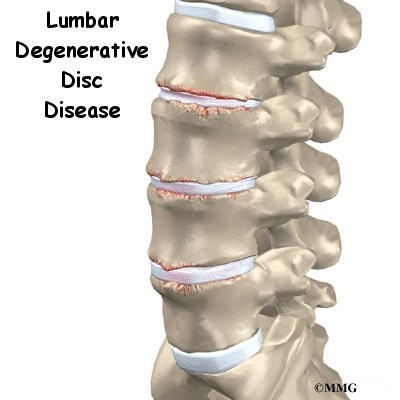
I have also done some research, many people have issues with either the L5-S1 disk (which is right above the tailbone, just above the arrow in the picture) or the L4-L5 disk, which is just above the previous.

It is hypothesized that the reason why so many people have issues with these two regions of the back, because they tuck their pelvis, i.e. they are sitting on their “tails”!

Whatever reason most of us tuck our pelvis is irrelevant. What is relevant is that we need to start correcting this posture.

My physiotherapist alluded to this awhile back. However, I think that there needs to be emphasis that there is a fine line between tilting your pelvis (bum out slightly), and arching your lower back - which puts strain on other areas of your back.

When you are in the correct posture, it shouldn’t feel forced. Your muscles should be toned, but not flexed. You can check this be feeling around your spine on your low back and looking for a grove along your spine. The grove (muscles) should be toned, but not so flexed that they are hard.

This way of sitting, standing, walking, etc., may feel weird at first – but I assure you… quickly this will feel like the right/natural thing to do.

Sunday, December 28, 2008

Horseback Riding


This is something I did for over 20 years, and of those 20 years, I competed for about 9 years.

Horseback riding, at least for me, involved sitting extremely straight, looking very proper, and having very strong legs to grip the horse to reduce bouncing.

I rode equitation and hunt-seat. Equitation in particular appears to involve the very straight, firm back with a strong gripped leg.

Ideally, horseback riding should require extremely loose and flexible hips and back – to absorb the bulk of the impact. Regardless, even if the rider is able to have loose, mobile hips and back, there is still a lot of impact that one undertakes.

Even so… there are many people who horseback ride for their entire lifetime – and do not endure severe back pain.

I think that years of horseback riding contributed to my back pain. However, I really think that it was poor posture while horseback riding (although I appeared to have excellent posture!), which required that the disks in my vertebrae absorb the bulk of the impact, instead of absorbing this impact naturally through movement within my hips and elsewhere.
When I write about poor posture, with the appearance of good posture, I am writing spefically about a tucked pelvis, and the rest of the back is very straight.
Look around at people, you will notice that many, if not most people tuck their pelvis, while doing normal activities.
An example of bad posture while riding is in the picture I posted. The pelvis is tucked under, putting a lot of stress in the L5-S1 region of the back.

Wednesday, December 24, 2008

Genetics

I mentioned genetics as a plausible explanation as to why I have a back-pain at such a young age, so I thought I should give it more attention.

My mother, and three uncles on my mothers side, all have chronic back-pain. And 3 out of 4 of these people (not including me) have disk degeneration in the L4-L5 disk… same as me!

I do think there is something to this. Are our bodies made to be weak in a specific area, which has caused this very, localized disk degeneration?

Or were we all brought up to walk the same, have the same posture, which caused this very specific disk degeneration?

I think that it is likely to be a combination of both environmental and genetics… as this is commonly the situation with physical attributes.

However, I do think that we can overcome this. AND, if we had correct posture throughout our lives we may have avoided this.

Tuesday, December 23, 2008

Why do so many people have back pain?

The spine is made up of approximately 28 un-fused vertebrae. Between each vertebra is a disk which is the shock absorbing system of the back.

One of these disks, the L4-L5 disk in my back, is gone… presumably from chronic pounding and force on this area of my back.

I was told by a doctor – disk degeneration is the price we pay for walking on our hind legs… This I was told when I was diagnosed with disk degeneration at the age of 30. Far to young to be given an excuse like this.

It was as if we, humans, have de-evolved, and are defective from other species. However, there are many people in the world – far older then me… and who have endured far greater physical stress…. Who do not have back pain!

Now in highschool, I learned that the spine is one of the best-designed structures in our body… so why… has mine failed?

Genetics?
Stress?
Horse-back riding and running?

It certainly isn’t because of age.

I have started to read this book called “8 steps to a pain free back”. And the theory in this book is that over the past 100 years, those in industrialized nations have poor posture during walking, sitting and performing any and all activities. And if we treat our bodies as they are meant to be treated, we can control and avoid most of the pain.

In fact, it states that 60% of adolescents have had back pain by the time they are 15 years of age! This should NOT be normal.

I think this book will be a good one. I have learned a lot from it already. It discusses the “gliding” (walking) and “hinging” (bending over) techniques.

And I can personally attest that these two things have made a remarkable difference in my back pain.

Monday, December 22, 2008

Relationships

This is something that is difficult to talk about – but is extremely important to discuss.

When someone is in chronic pain, it is difficult for those around them to understand what they are going through.

The person not in pain may think: “how should I act?” “Why are they always sad?” “I don’t know what to do”

Whereas the person in pain may think: “I wonder if they think I am faking?” “It is difficult for me to always ask for help, I must be such an inconvenience” “I wonder if they still love me?”

Ultimately, as with all ups and downs in relationships, it is essential to have open communication.

What do you need from your partner? Support, help doing chores, physical assistance?

How should your partner act? Sympathetic? No different than before?

It is important to let your partner know how you feel, emotionally and physically. However, it is just as important to make a concerted effort, with a professional, to find out what is wrong, and how to manage the pain or ultimately determine if surgery is required.

Too many times, people tend to believe that there is a magic pill for everything. Dealing with pain is a daily struggle. However, the more you learn about your pain and how to manage it, the better things become.

Educate yourself and those you are in relationships with. This I have learned brings people closer together, and makes the daily struggle, far less of one.

Sunday, December 21, 2008

Walking (gliding)


I read an interesting article on day to day activities that one can do to reduce back pain. I also have a physiotherapist, whom I see less and less (thank-you), who puts more emphasis on posture and walking than I have heard since I was a kid!

Makes perfect sense. What you do repetitively has a dramatic impact on how you feel. This physiotherapist analyzed my stride and movement as I walked.

My hips were immobilized, I was very weak on one side, and I walked without using my glutes and relied heavily on my quadriceps.

The information in the article added further to the information I received from my physiotherapist. The article termed walking as “gliding”.

One should glide as they walk. Energy should be focused on forward movement, pulling the leg back with the glutes, and also using the muscles in ones feet to propel forward.

This term “gliding” really helps provide an accurate description of how one should walk. The walk should be quiet (pounding sends stress through the knees, hips and back), and the leg that is up should hang loose in the hip, relaxed, not stressed and tight as is typical in North America.

When the foot meets the ground, the knees should be slightly bent. Also, you may feel like you are leaning forward. But intentionally leaning forward slightly will help you perform the gait.

I have found just concentrating on my walk for even five minutes has alleviated muscle spasms and extreme tenderness that typically follows activities such as shoveling snow.

I will continue to work on my walk, until gliding becomes second nature

Saturday, December 20, 2008

Bending over


I found some information on bending over – which made dramatic improvements to my daily back pain.

I would typically bend over, slightly rolling my back (which I felt stretched my back, but in fact strained my back), or bend my knees.

Bending your knees is fine. However, for doing something lower (and not picking up something heavy) one should hinge at the waist, and stretch out in a way that I think is similar to the beginning of the sun salutation in yoga.

You may notice doing this that your hamstrings are extremely tight. However, things will stretch over time, and this form of bending engages your glutes and puts less strain on your back. You should be bending your knees in this position, which should alleviate a lot of the hamstring tension.

I could not believe that one day of bending over like this, caused tremendous relief in my back pain that I typically endure daily, to some degree.

This is something else that I will continue to do until it is second nature.

Friday, December 19, 2008

Accurately locating pain


Along with identifying the severity of pain, one must also be able to locate the pain.

For instance, I find that professionals are quick to pinpoint any pain in the buttocks or legs as “sciatica”. This is likely because this is common in industrialized nations where individuals have poor sitting and walking posture and generally poor posture while doing regular activities. However, in my situation, this was an inaccurate diagnosis.

I even felt pressure by the professional to state that my leg pain was running down the back of the leg – so they could diagnosis my pain as sciatica.

In fact, my pain ran down the front of the leg, and ends at the knee. Which is my femoral nerve being pinched (see picture). However, the professional gave me the impression that I was inaccurately locating my pain, and in fact it was running down the back of my leg -- I should have stuck to my guns.

Pain has a way of numbing the whole body. However, you must become very attuned to the pain, and understand where it is, and what causes it to become more severe. Professionals need specifics. These specifics may cause them to have a light bulb moment.

If you feel you are providing very specific information about your pain, and still not receiving appropriate treatment, then I suggest moving on. I cannot count the number of professionals I went thorough. Most of these professionals helped me to some degree – very few (only one in fact) reversed progress.

Wednesday, December 17, 2008

Accurately identifying pain

This was one of the most important determinants of a successful and accurate diagnosis. This and seeing the right professional!

Rating your pain.
I would be asked to rate my pain from 1 – 10. However, I was always in pain so I would rate my pain much lower as my tolerance had gone up AND I rated my pain in relation to the pain I was already in.

So if I was always a 6 or 7, and a professional would move me in a certain way which would cause the pain to increase to a 9 or even 10… I would say that it was a 4. Because the pain had only gone up 4 points.

My suggestion is to not do this. My sense is that most people’s pain tolerance is low. So if you say that something isn’t that painful (relative to the pain you are already in)… then it isn’t noted very highly, and may go unnoticed by the professional.

My observation is that when I ranked my pain much higher – I was able to receive a quicker, more accurate diagnosis.

Don’t be a solider in this situation. Be honest with how much pain you are in. If you don’t tell your professional in accurate detail – you may not be given the attention you deserve.

Tuesday, December 16, 2008

Weight gain

Another aspect of struggling with chronic panic, at least for me, was weight gain.

Because I was so active prior to the pain, weight gain seemed to come easily once I could no longer be active. Compounding the inactivity was also my struggle with depression, and being perpetually exhausted as I could no longer sleep. Lack of sleep and depression, I believe, led me to turn to food for some relief.

So I had less calories expended, and far greater calories consumed - this obviously led to weight gain!

Prior to this, I had never been overweight. Typically, quite the opposite. Because of this, I found it emotionally difficult to gain weight, lose tone, and not fit into my clothes anymore!

In fact I didn't go shopping for clothes for 3 full years, because I wasn't willing to puchase anything in the plus sizes. But I was of course willing to walk around in clothes that were old and falling apart - AND didn't fit me!

Very attractive ;)

The solution for this (for me anyway) was to manage my pain. As a result, bit by bit, I am getting fitter and feeling great about myself.

Scoliosis


When I was approximately 11 years old. My mother took me to our family doctor for my regular check-up. He noticed that I had slight scoliosis, approximately 7 degrees off. This is in no way severe, and only people with an acute eye can can recognize it. In fact, the scoliosis with time went down to between 3 - 5 degrees off.

Could something so slight have contributed to disk degeneration? Perhaps this slight abnormality contributed to bad posture, and my horse back riding and long distance running contributed? Who knows. But it would be interesting to know how many other young people with my condition also have slight or more severe scoliosis.

Monday, December 15, 2008

My Journey

Prior to living with chronic backpain, I was a very active, young, healthy, vibrant female. I would run at least 40km a week, climb at least 3X per week, go dancing with friends, walk my dog, and for 2 decades I was a horseback rider (equestrian).

In the summer of 2005, I noticed that I would have radiating pain in my hips, that would ultimately lead to severe muscle spasms througout my back. This would typically happen after a run, or doing house chores such as vacuuming.

I had just begun to date an amazing man, who is now my lifelong partner, who had known me as everything I had described above; a very active, energetic female.

We both noted that these muscle spasm events would occur more and more. And in particular, I had signed up for a yearly race "Run for the Toad" which occurs in Ontario, Canada every year. I had run this race 3 times previously, and loved it. It was a trail run - so it was a pleasure to run through the forest and not have the chronic pounding of the payment that exists in the other races I typically ran.

Well... I couldn't finish this race! Me! I could not finish - the pain was unbearable... something was definetly wrong.

So I took a break from running, thinking that a break was all that I needed. In the mean time I was seeing two professionals: a Chiropractor and an Active Release Therapsit (ART) (a specialized form of Massage Therapy). The Chiropractor told me my pain was a result of how active I was. And my Active Release Therpist, knew something was strange, but couldn't pin-point it.

Because I had seen a chiropractor, and because I was so young... my back as being the issue was never even looked at! The hips was where everyone focused.

My massage therapist, noted that I had a severe, prolonged spasm on the lower, left side of my back. When she would release this spasm, the pain the next day was horrible. It literally felt as if someone had hit me with a bat on my back. She showed me her anatomy book which showed a connection with this area of my back, and my glut muscles which were perpetually in spasm. Extremely painful.

She sent me to an Osteopath, who noted how stiff my whole body was, but could not identify the source. At this point, I was going into year two of dealing with chronic pain. So I am now seeing weekly a chiropractor, massage therapist and osteopath - with NO IMPROVEMENTS!

Finally, as last resort I saw my family doctor (General Practioner). I say this as a last resort, because my experience with family Doctors is that they know very little about a lot - and I had yet to see much benefit from their expertise (my apologises to all General Practioner Medical Doctors out there).

My G.P. asked me to slowly bend over and touch my toes. She saw an obvious sign that there was something wrong with my back! And yes... my chiropractor or the first osteopath (yes there were others)... could not see this!

So she sent me to have an x-ray and see a Sports Doctor. Within two weeks, I was able to get in to see this new doctor. He opened the door, and hadn't even sat down before he told me my prognosis.

"your L4-L5 disk in your back has degenerated and your L4 and L5 vertebrae have begun to fuze, as a result you have been receiving severe nerve pain"

I was shocked and emotional. He was so blunt with his announcement, completely unaware of how long I had suffered.

Wow!! If I only saw my General Practitioner Doctor first! This would have been solved in 2 weeks.

But of course, this is only the beginning of my journey.

More to come.

About me

Hello everyone!

Welcome to my blog. I am writing this blog with the hope that people out there with chronic pain can learn from my experience, gain proper treatment, and begin to live (relatively) painfree.

I am a 31 year old female, who has dealth with chronic backpain since the summer of 2005. It took over a year and a half to receive a proper diagnosis, and therefore, receive proper care.

That is a year of a half of intense pain, sleepless nights, stopping most if not all of my social events - which were typically active social events, e.g. running, climbing, dancing and even walking. A year and a half of friends and family not sure how to handle the "new" me... and ultimately feeling a sense of despiration, and slowly falling into depression. I went from specialist to specialist - and everyone clearly seeing the symptoms, but no-one being able to determine the cause.

When the pain started and did not subsist - not only did I turn to many professionals: chiropractor, sports doctor, physiotherapist's, active release massage therapist and osteopathy; I also turned to the internet to see if anyone else had my problem.

Suprisingly, not many clear signals emerged... I was not able to assist with a proper diagnosis.

So with this blog, I will take you on my journey, telling you how I went from bed ridden, to now being very active - I can even do the P90X workout! And also tell you how I maintain a healthy lifestyle, and deal with, and ultimately prevent future painful flairups.

Sincerely,

Lindsay